By Rasmus Nyholm Jørgensen, project manager for OdinsAEye
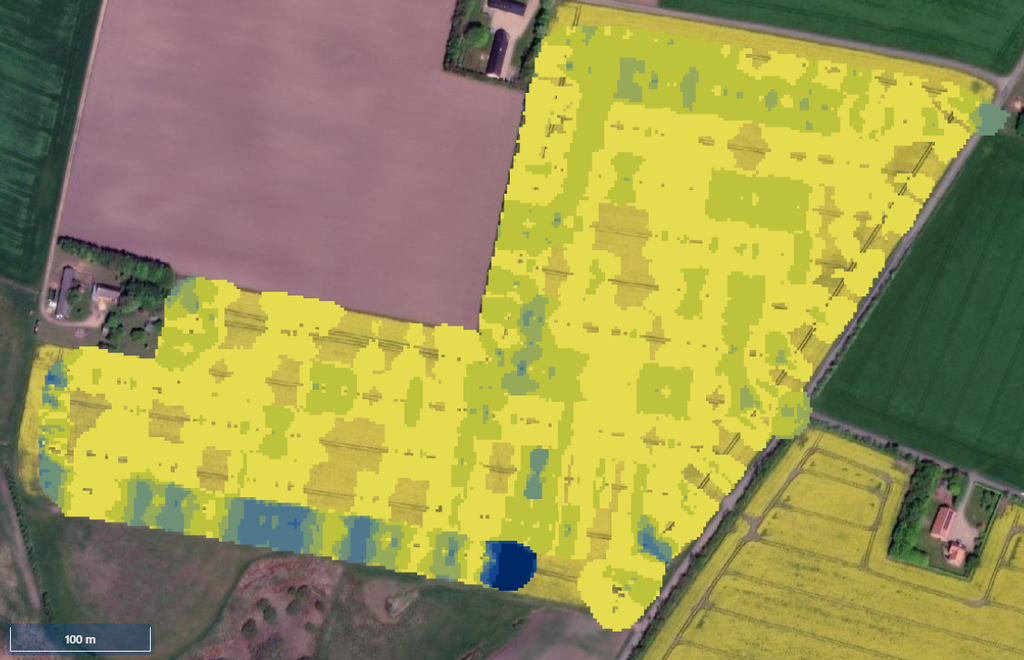
How do we get cameras and artificial intelligence to make a difference to the farmer’s weed control? I address this question in a background article in LandbrugsAvisen, published on September 9, 2026.
The starting point is experience from the work of converting weed registrations into treatment under normal operating conditions. Here it becomes clear how much has to work before a finding in a picture can lead to a useful decision in the field.
Three messages are of particular importance to our work at OdinsAEye:
The solution must fit the farm. A treatment plan must take into account the farmer’s sprayer, terminal, available funds and time to carry out the work. Therefore, development must take place close to practical operation.
The farmer’s experiences must make the system better. When a plan is changed along the way, the justification can provide important knowledge about conditions that the technology does not yet handle well enough. This requires that the experiences are easy to record and that there is trust in how the information is used.
The effect must be documented in the field. We must examine the connection between the proposed treatment, the work actually carried out and the result for weeds and crops. Trials that cause problems must also contribute to the next improvement.
In OdinsAEye, we work to connect camera recordings from regular field operations with the farmer’s decisions and machines. The ambition is to reduce herbicide consumption without yield loss, with the farmer’s and advisor’s professional assessments as a central part of the solution.
In the article, I elaborate on the experiences from previous projects, the challenges in practice and the principles we are taking forward.
Read the full article in LandbrugsAvisen:
Præcisionsbekæmpelse af ukrudt: Derfor er den sidste meter den sværeste
The article is in Danish and requires a subscription.